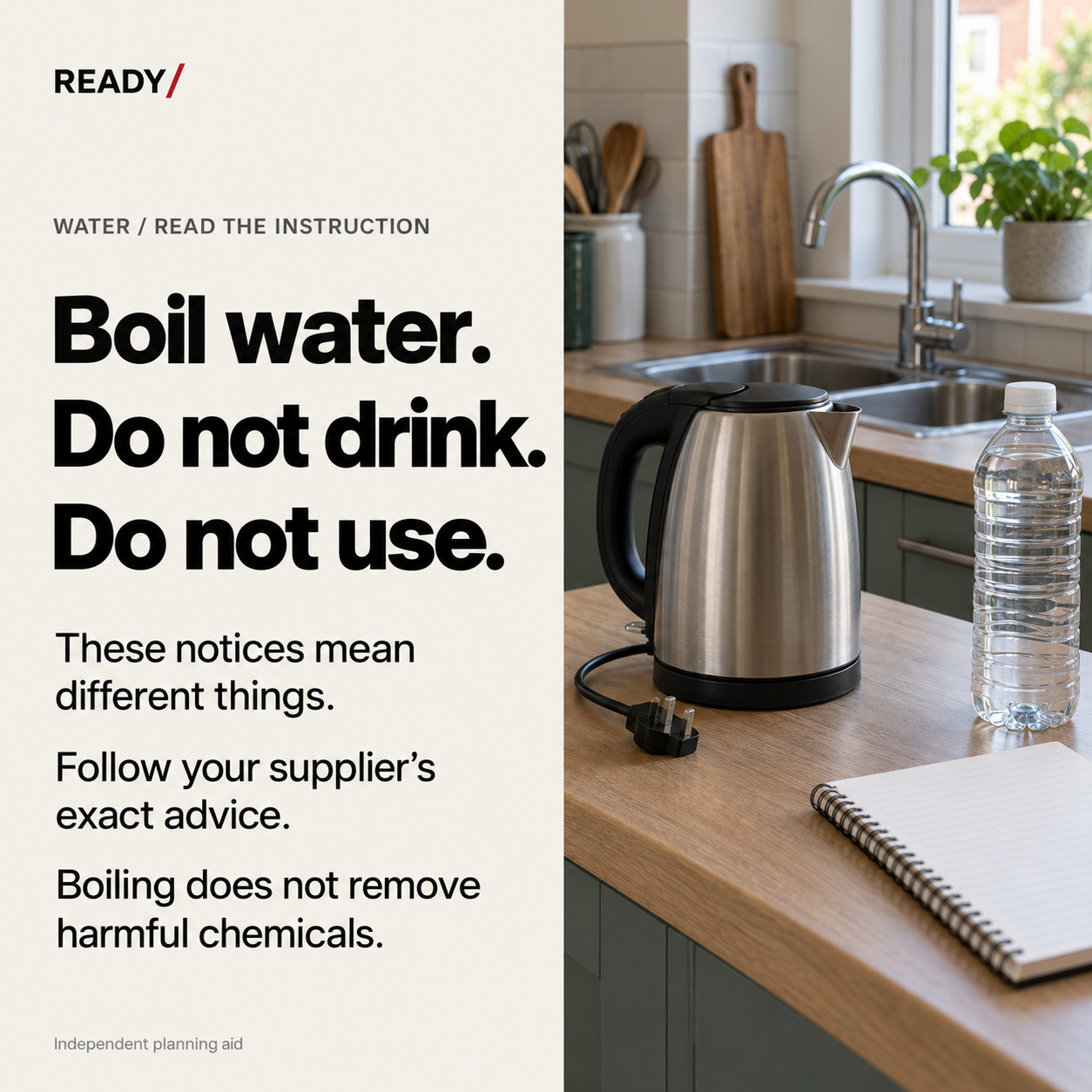
A disruption to the water supply can create two separate questions: what water is available, and what the supplier says you may use it for. Counting bottles answers only the first. If someone in the household sees a notice, the next useful step is to preserve its instruction accurately.
Three headings, different decisions
UKHSA distinguishes boil-water, do-not-drink and do-not-use notices. Boiling kills microbes but does not remove harmful chemicals. Do not replace one instruction with another because a kettle is available. [2]
The Drinking Water Inspectorate explains what a boil-water notice can involve, including drinking and food-related uses. Follow the actual notice from your supplier for the affected supply and permitted uses. Do not assume that an example from a previous incident applies to this one. [1]
| Wording you encounter | Decision to preserve | Question to resolve from the notice |
|---|---|---|
| Boil water before specified uses | Keep the preparation instruction attached to the named uses | Exactly which uses and preparation steps does this notice cover? |
| Do not drink | Do not turn a drinking restriction into a boiling instruction | What does the supplier say about cooking, brushing teeth and other uses? |
| Do not use | Do not narrow the restriction to drinking | What alternative arrangements and updates does the supplier provide? |
This table is a reading aid. It does not authorise any use of affected water.
Make a record someone else can understand
A useful note needs less interpretation and more context. Use the exact wording, the official source and a checked time. Keep the original message or a legible copy alongside your summary. A screenshot without its date or supply area can be easy to misread later.
Try this blank record:
- Source and time checked: ______
- Affected address or supply area: ______
- Instruction, copied exactly: ______
- Uses explicitly covered: ______
- Questions still unanswered: ______
- Alternative supply arrangements: ______
- Next official update location: ______
Avoid filling an empty field with a guess. Write “not confirmed” and identify who will check it. That makes the next action visible and stops uncertainty being passed on as a settled household decision.
Test the handover, not the water
For an advance planning exercise, imagine that the person who normally handles household messages is unavailable. Could another adult find the supplier’s contact route and explain where they would look for a current notice?
Then practise handing over a blank record: who checks the official update, who tells the other people at home, and how will you replace an outdated note? Do not manufacture an official-looking alert for the exercise. Label practice material clearly and keep it separate from current instructions.
The useful result is a short communication routine. One person should not have to translate half-remembered advice every time someone asks whether a particular use is covered.
Keep reserve planning separate
You can plan drinking-water reserves ahead of time without predicting the cause of a future disruption. Record the amount you intend to keep, where it fits and who reviews it. During a real notice, return to the supplier’s current instructions rather than treating a reserve calculation as a safety assessment.
The completed decision is simple: we know where to find the instruction, how to preserve it, and how to flag anything we have not confirmed.
Plan a drinking-water reserve →