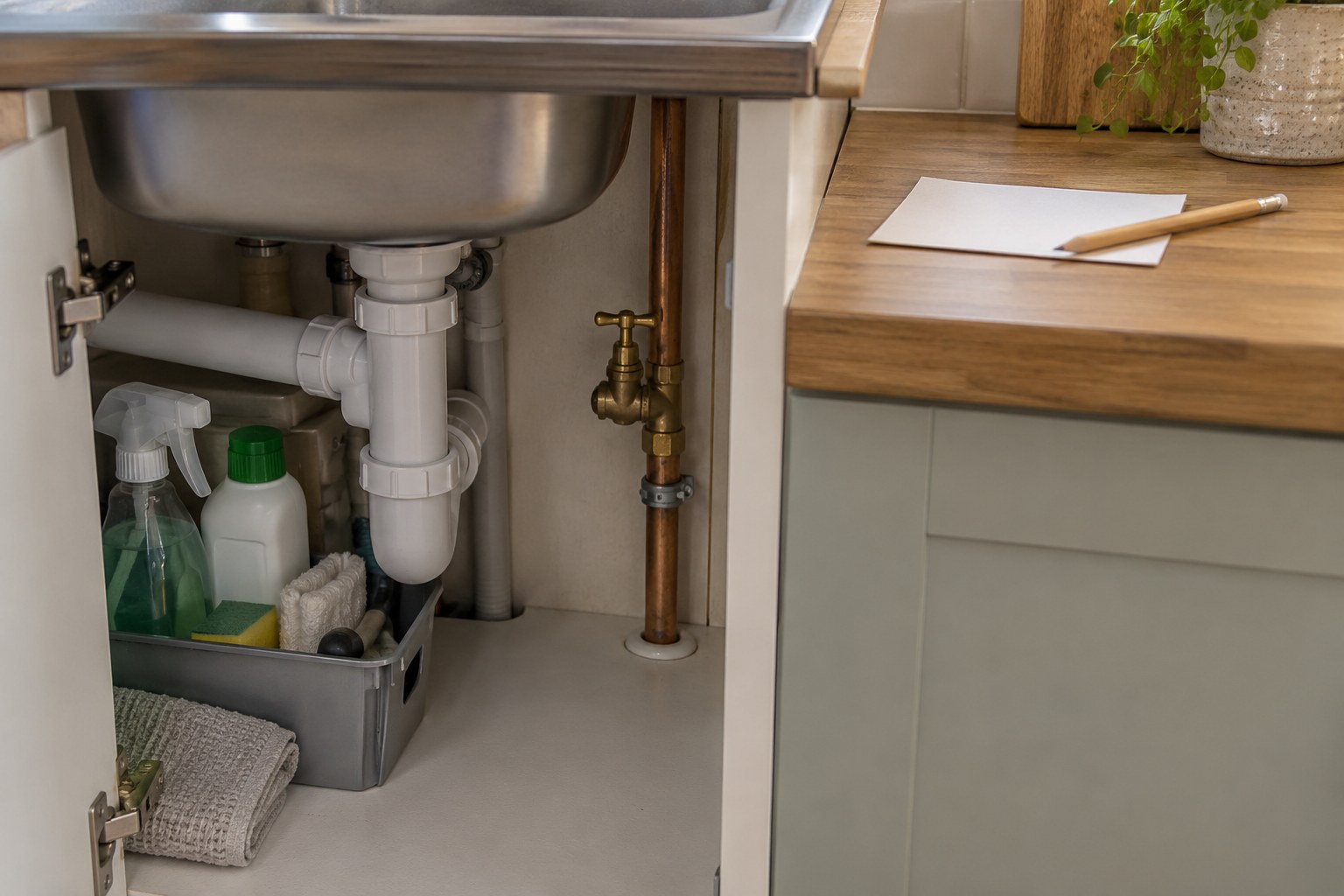
A useful new-home systems map records where important equipment is, who can access it and which questions still need an answer. It can start as one sheet of paper. You do not need a technical drawing of the property.
Begin with the things you would struggle to find while distracted: the internal water stop tap, consumer unit, heating controls, utility meters and the contact details for relevant help.
Walk through the house with a question list
Make three columns: found / explained / follow-up. Keeping these separate stops “I saw a switch” becoming “I know how the system works”.
For the water supply, WaterSafe lists the kitchen sink cupboard as a common internal stop-tap location, alongside places such as a utility room, garage or downstairs bathroom. It advises operating the valve gently and never forcing it. [1]
Your own arrangement may be different. In a flat or rented home, ask the landlord or building manager which controls serve your property, which are communal and who is authorised to deal with them.
| Item | Record | Useful handover question |
|---|---|---|
| Internal water stop tap | Location and access | Is there a known issue with this valve? |
| Consumer unit | Location and existing labels | Who can explain any unclear labelling? |
| Heating controls | Model and manual location | Which control sets heating and hot water? |
| Meters | Location and supplier details | Is any access shared or restricted? |
| Maintenance contacts | Role and contact method | Who handles which type of fault? |
Take location photos, then write a useful caption
A close-up of equipment can be hard to place later. A photograph showing the cupboard within the room, paired with a short note, may be more useful for someone who did not attend the handover.
Keep these photos private. They can reveal access arrangements, account details or other information that does not belong in a public social post. For the shared household copy, include only what people need to find the item and get help.
Do not open electrical enclosures or dismantle appliances to complete the sheet. If identification needs that level of access, make it a follow-up for a competent professional.
Give unanswered questions an owner
Write “ask landlord”, “request correct manual” or “book plumber” beside the relevant gap. Add who will do it. Without an owner, an unknown tends to remain an unknown after moving day has passed.
Keep the first version short enough to use. A clear note identifying one unresolved control is worth more than a polished floor plan with the important information missing.
Make the map usable by someone else
Ask another household member to find an item using your note. Do this as a location exercise; nobody needs to operate equipment as part of the check. If your directions depend on “the usual cupboard”, rewrite them.
Leave a copy somewhere agreed and accessible. Keep manuals together, and note when a landlord, installer or supplier changes a system. The map should describe the home you have now.
Finish the first pass
The free Home Systems Check helps identify the locations you still need to confirm. READY/09 — Home Systems is the matching record for keeping the answers together. Start with the walkthrough and use what you already have to capture the result.
CHECK YOUR HOME SYSTEMSSources
Source review: 2 November 2026. READY/ Editorial. Independent planning aid; current official and provider instructions take priority.