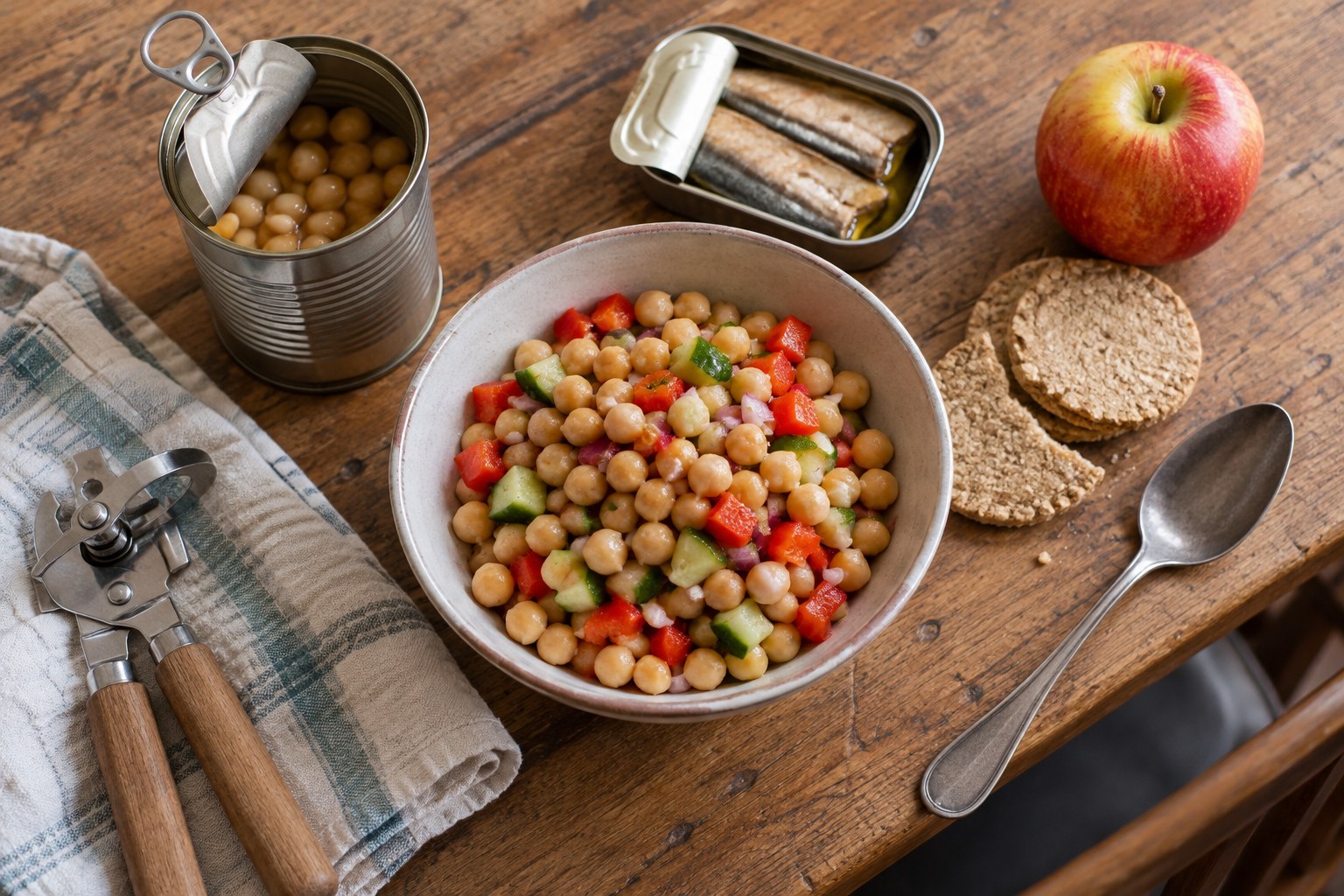
Start a no-cook cupboard by choosing familiar meals made from suitable shelf-stable products labelled ready to eat. Check the complete meal, including how you will open it and what happens to leftovers.
A bag of pasta is useful food. It also represents a dependency on cooking, water and equipment. The question for this exercise is narrower: what can your household eat if the normal cooking arrangement is unavailable?
Plan a meal before planning a stockpile
Choose one breakfast, one lunch and one evening meal that people at home would accept. Use foods you normally buy where possible. Check the label rather than assuming every canned or packaged ingredient can be eaten without preparation.
A combination might use crackers or oatcakes, a suitable ready-to-eat protein and fruit. A different household may need completely different ingredients. The useful part is the method: a recognisable meal, sensible portions and no hidden preparation step.
| Check | Question to answer |
|---|---|
| Preparation | Is every component suitable to eat without cooking? |
| Opening | Can we open each pack with equipment we have? |
| Portions | Is there enough for the people who will eat it? |
| Storage after opening | Would this leave food needing refrigeration? |
| Suitability | Does this meet allergies, dietary needs and preferences? |
Try the meal under normal conditions
Assemble it on an ordinary day without using cooking appliances. This is a practical way to discover whether the idea works for your household. You might find that the portions are too small, the pack is awkward to open or an ingredient nobody likes has made the plan less useful.
Write down the correction while it is easy to make. You are testing the meal choice, rather than staging an outage or turning off household equipment.
Buy pack sizes that fit the plan
A large container may be economical during normal use but awkward when leftovers require refrigeration. Compare usable portions and storage requirements, not just the quantity on the label.
Keep the relevant food together or record where it is. If other household members use an item, the plan needs either a replacement or an updated meal. A rotating part of the normal cupboard is easier to understand than a collection of unfamiliar products.
Treat chilled food as a separate decision
During a power cut, limit opening fridge and freezer doors and consult current FSA advice before deciding what to keep or discard. [1] This article deliberately avoids turning estimated cooling times into a guarantee for your appliance.
UK food-labelling guidance distinguishes use-by dates, which concern safety, from best-before dates, which concern quality. A smell check does not make food safe to eat after its use-by date. [2] Follow storage and preparation instructions as well as dates.
Write a short cupboard plan
Record meal / products / portions / opener or utensils / replacement needed. Add only the details that make the next meal possible. Keep ordinary dietary needs at the centre of the choice.
Then check the other parts of the routine. Food may be sorted while lighting, communication or heating still relies on assumptions. The free Power Dependency Check helps put those related gaps in one place. Its matching planning system is READY/02 — Power / 72 Hours.
CHECK YOUR COOKING AND OTHER POWER DEPENDENCIESSources
Source review: 2 November 2026. READY/ Editorial. Independent planning aid; current official and provider instructions take priority.