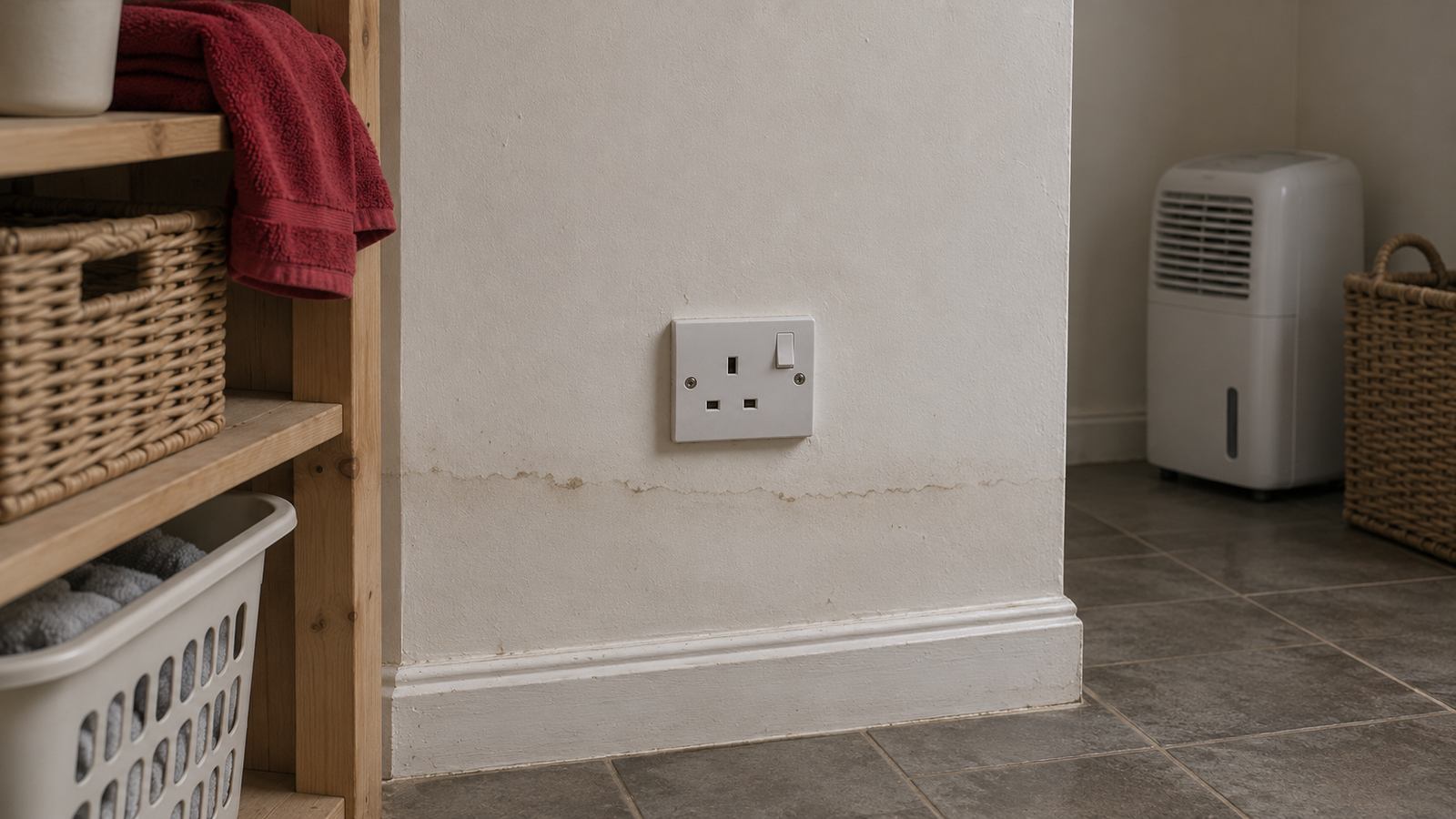
The misleading sign: A flooded room has been cleared and the walls look dry. But water damage to electrical installations can remain invisible. The return of normal appearance is not a safety test.
What matters after water has entered a home
Electrical Safety First advises people to make sure a flood-affected property is safe before re-entry, avoid remaining water, treat exposed wiring as potentially live, and seek assessment by a registered electrician before using affected installations and appliances. A consumer unit must be operated only if it is safe to do so. If it has been wet, damaged or is surrounded by water, do not approach to switch it yourself.
Water may affect socket-outlets, switches, cables, fuseboxes and connected appliances. Contaminated floodwater can worsen the problem. A property can therefore appear dry enough to walk through while still requiring electrical inspection.
A safe order of decisions
1. Follow official re-entry advice. If emergency services or the relevant authority have declared an area unsafe, do not enter to inspect or retrieve equipment.
2. Do not energise wet or damaged circuits. Do not plug in appliances or operate breakers as a trial-and-error check. Do not touch exposed wiring.
3. Get the right assessment. A registered electrician can assess damage and advise what needs drying, testing, replacing or reporting. Electrical Safety First recommends an Electrical Installation Condition Report (EICR) where relevant.
4. Contact your insurer and property owner as appropriate. The Association of British Insurers recommends prompt contact after storm damage and documentation of damage. If you rent, contact your landlord or managing agent as well. Don't undertake unapproved repairs that could create further danger.
5. Record before disposing. Document the damage safely, retain receipts, and take the insurer's advice on damaged contents. Do not keep hazardous items purely for evidence.
A question to settle before it happens
Who in your household knows which professional to call if water reaches electrical equipment? Keep the electrician, insurer and landlord contacts in an accessible place. If water damage is active, this page is not a substitute for urgent professional and emergency guidance.
Conversation question
Would you have thought to call a registered electrician before switching the power back on after flooding?
Sources
- Electrical Safety First, Electrical safety after a flood.
- Association of British Insurers, storm damage and claims guidance.
Never attempt electrical repairs, fault-finding or restoration on a flood-affected installation yourself.
Source links
- Electrical Safety First — Electrical safety after flooding.
- Association of British Insurers — Storm damage and insurance claims.
READY/ produces independent practical planning aids. This article does not replace current advice from public authorities, emergency services, providers or qualified professionals.