READY/
MENU
THE SYSTEM / 01–12

FIND THE GAP.
MAKE THE PLAN.

Twelve distinct planning jobs for UK households and small businesses. Start with the topic that matters to you, use the three free starting actions, then decide whether a printable plan would actually help.

START WITH FREE TOOLS

ALL 12 TOPICS

No account is required to use the free starting actions. Paid plans are optional digital printable documents, not physical emergency kits.

CHECK THE EVIDENCE METHOD
READY/01 MAKE ONE USEFUL START.
READY/01

Quick Start

Ten minutes. One practical next step.

  1. Choose one disruption your household could face.
  2. Write down the people and everyday tasks it would affect.
  3. Agree one useful action to complete today.
EXPLORE THIS TOPIC
READY/02 KNOW WHAT STOPS.
READY/02

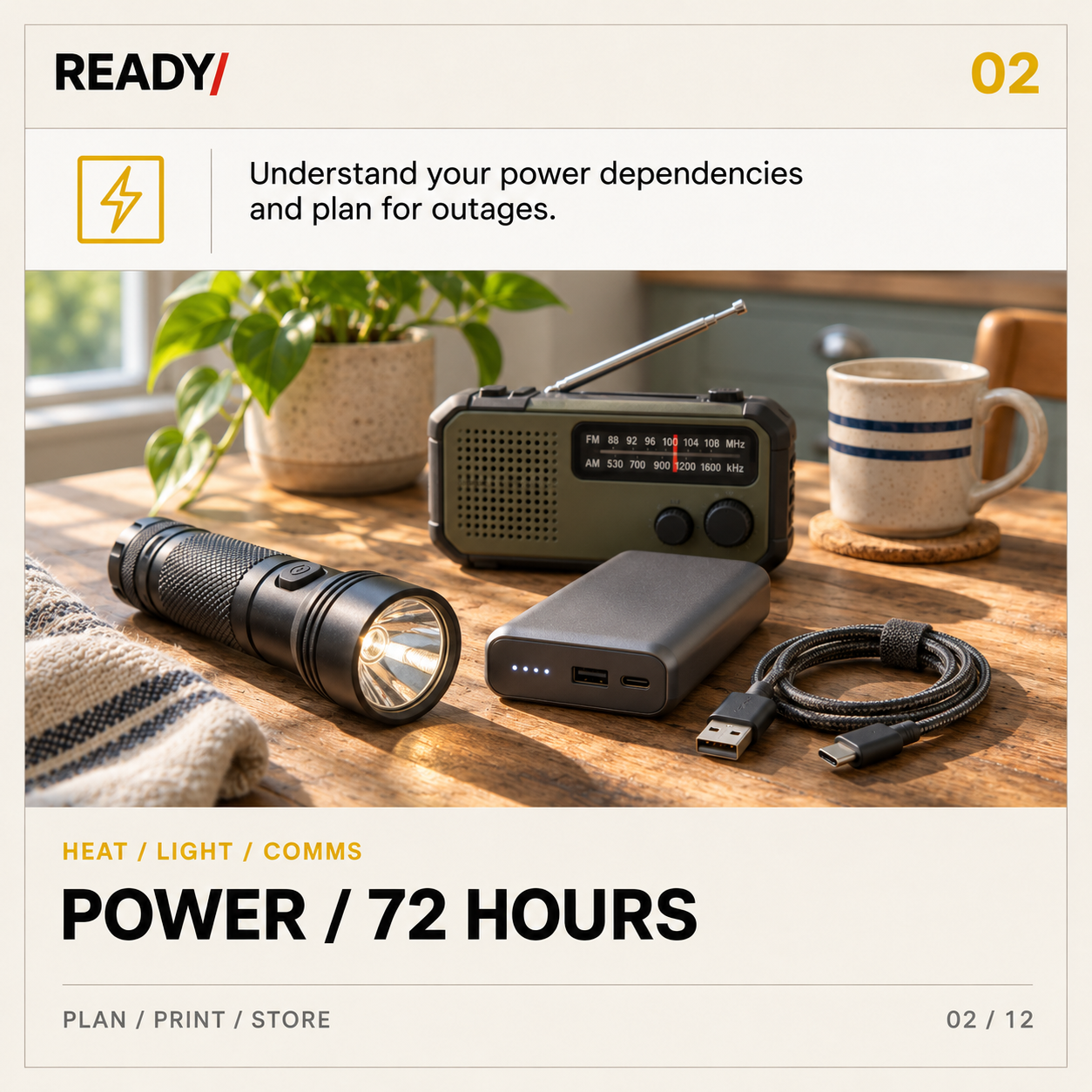
Power / 72 Hours

Power cut planning starts with dependencies.
  1. List the household tasks that need electricity.
  2. Keep relevant supplier contacts available offline.
  3. Check the instructions for any equipment you plan to rely on.
EXPLORE THIS TOPIC
READY/03 PLAN THE WATER.
READY/03

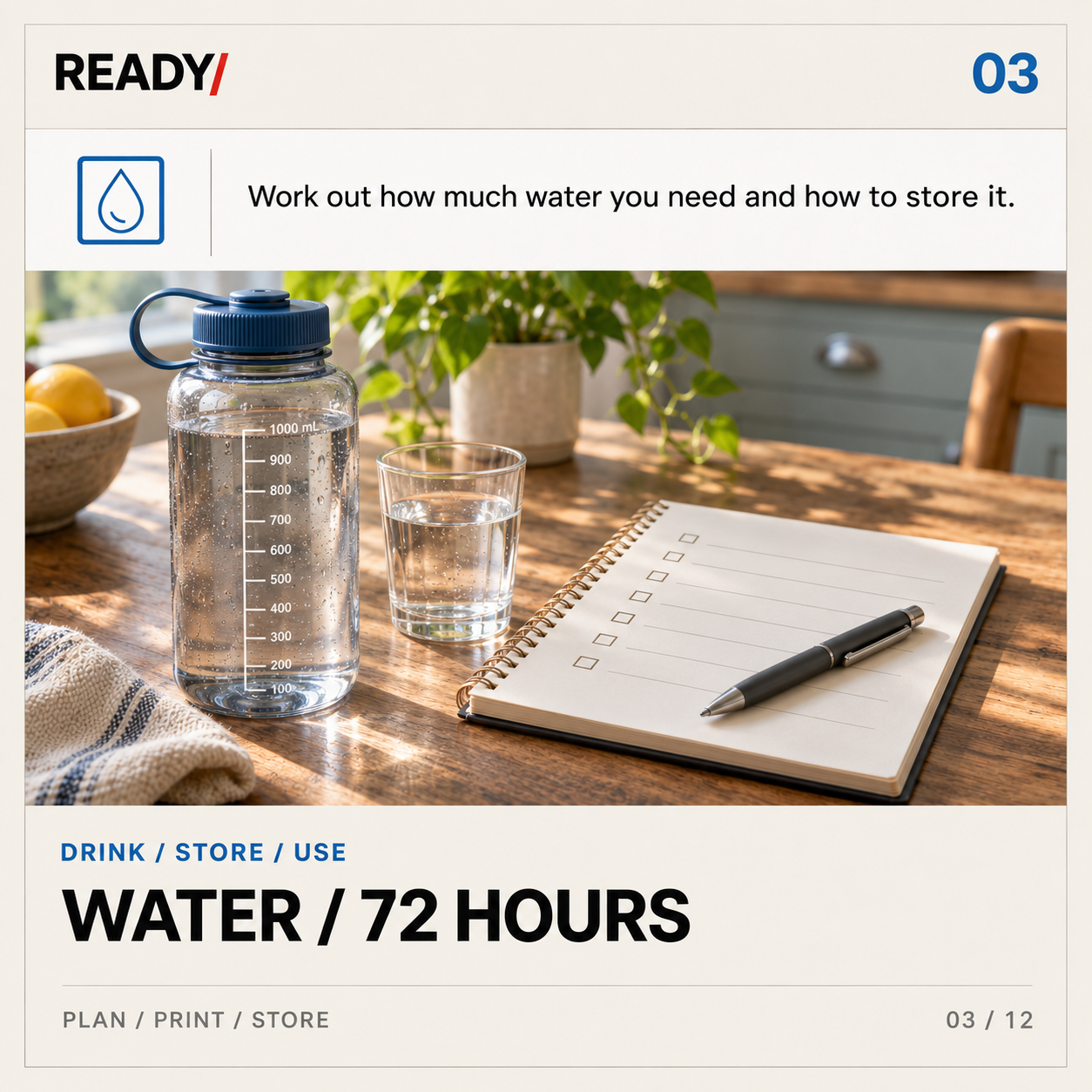
Water / 72 Hours

Start with the needs of your household.

  1. Work out who your household plan needs to cover.
  2. Separate drinking, food preparation and other essential uses.
  3. Record your supplier’s contact details and where to find current instructions.
EXPLORE THIS TOPIC
READY/ Weather / Winter campaign artwork.
READY/04

Weather / Winter

Home. Travel. A change of plan.

  1. Identify which travel or household arrangements depend on the weather.
  2. Agree who will check current forecasts and warnings.
  3. Write down what would make you change the plan.
EXPLORE THIS TOPIC
READY/ Family / 72 Hours campaign artwork.
READY/05

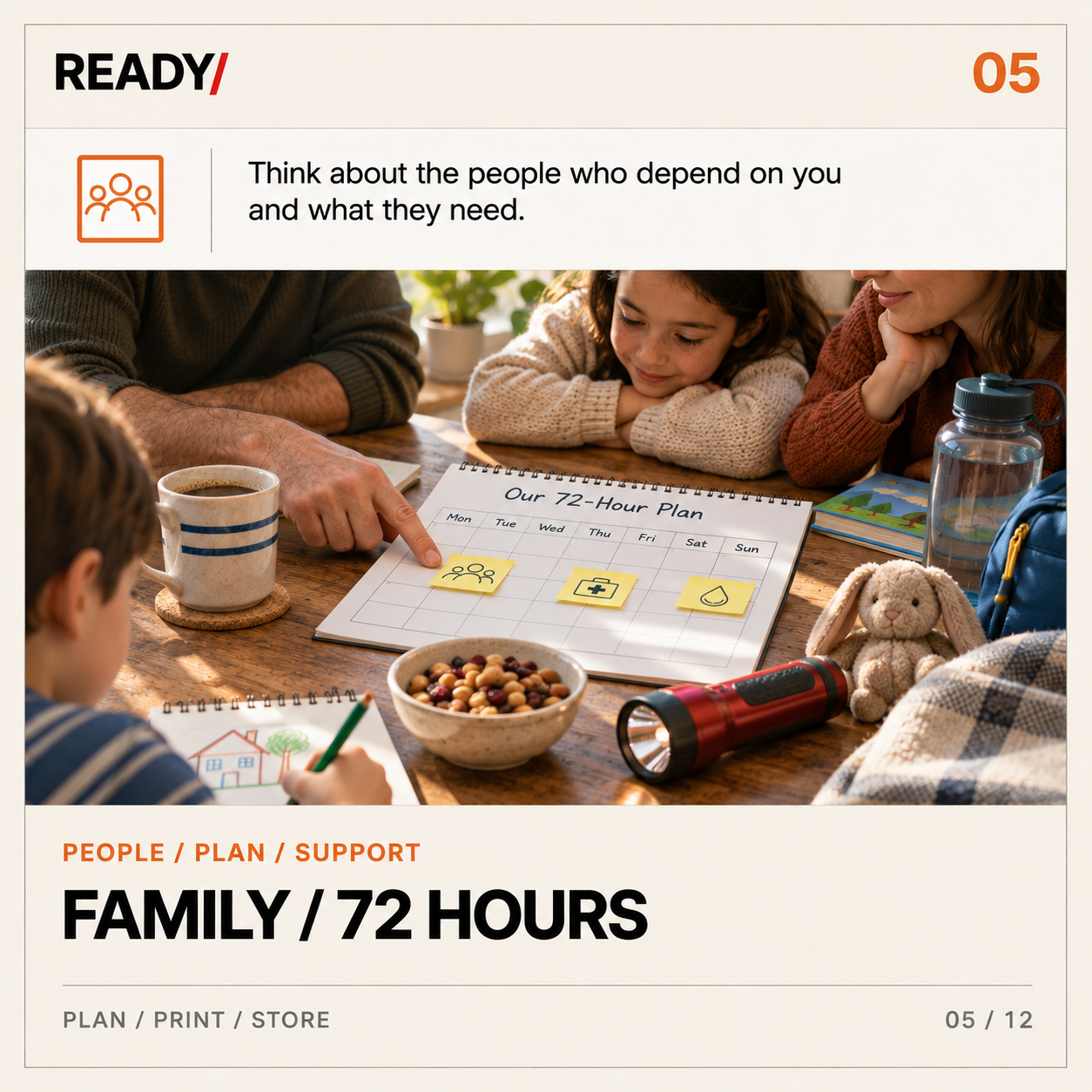
Family / 72 Hours

Contacts and responsibilities everyone can find.
  1. Agree who will contact whom if routines are disrupted.
  2. Record the needs and arrangements that other household members must know.
  3. Keep the plan accessible to the people who need it and review it together.
EXPLORE THIS TOPIC
READY/ Pets / 72 Hours campaign artwork.
READY/06

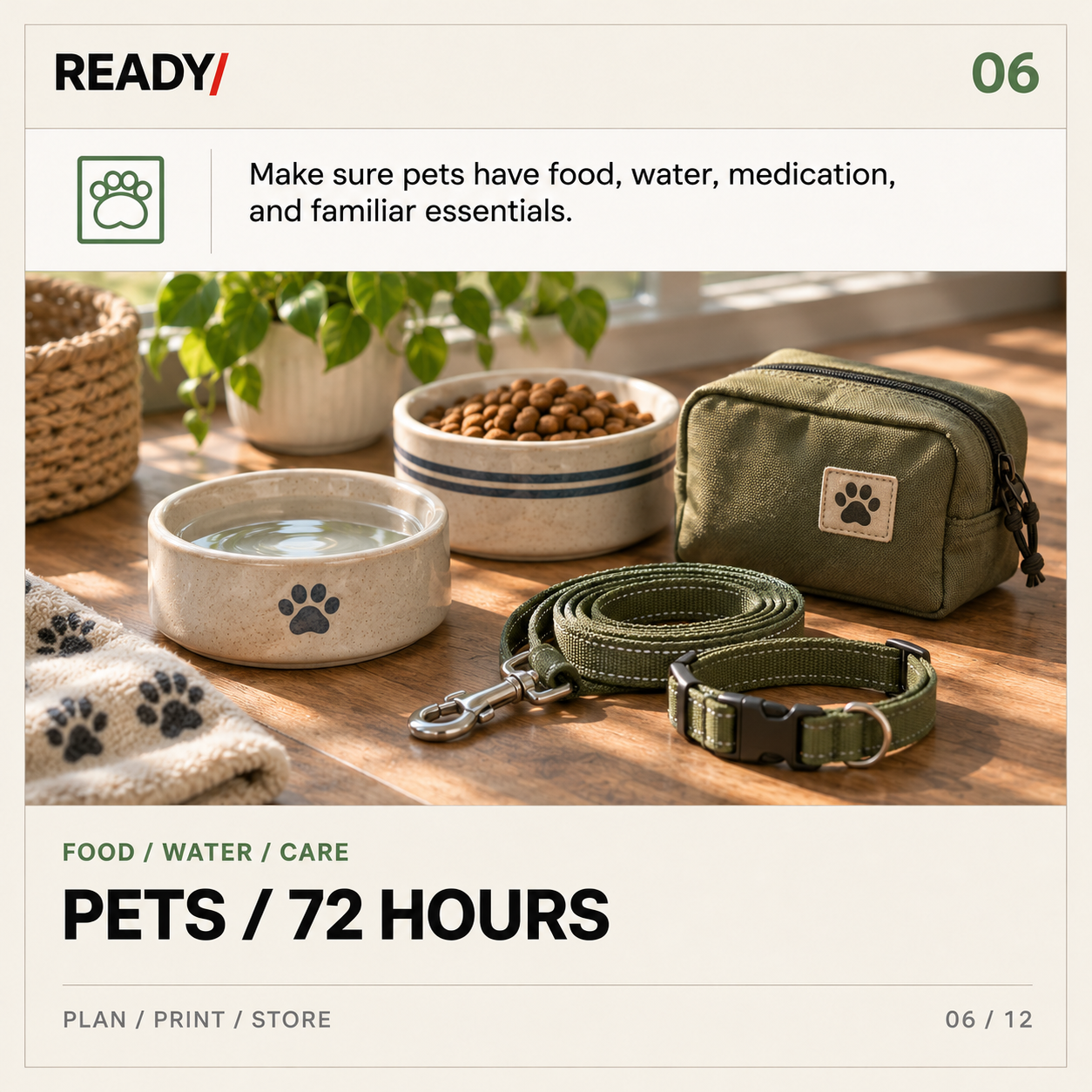
Pets / 72 Hours

Make care easier to hand over.

  1. Write down the usual food and care routine.
  2. Record the vet contact and any existing professional instructions.
  3. Agree who could help and where essential pet supplies are kept.
EXPLORE THIS TOPIC
READY/ Food + Water campaign artwork.
READY/07

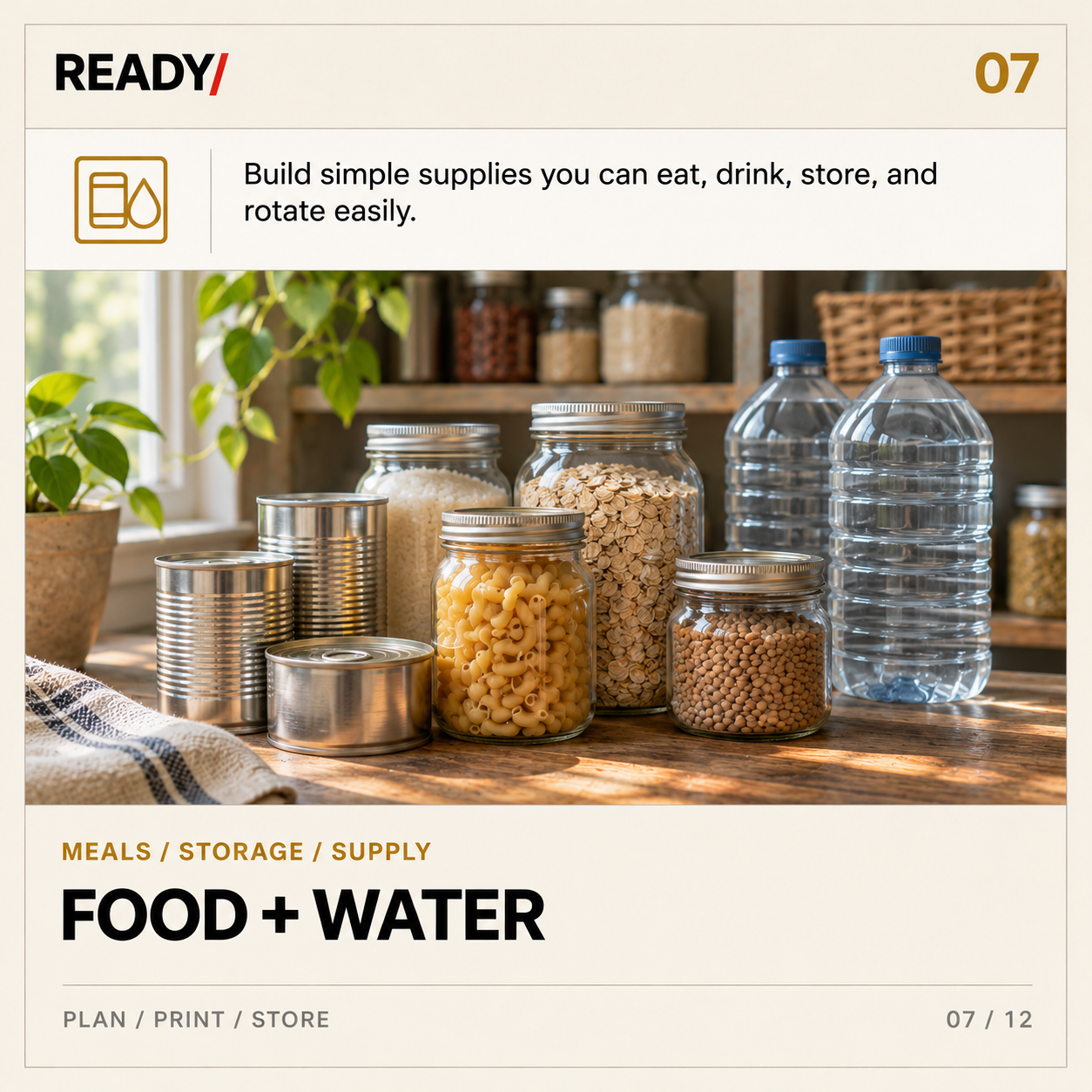
Food + Water

A sensible household buffer starts at home.
  1. Check what your household already eats and keeps at home.
  2. Consider preparation needs, dietary needs and storage space.
  3. Review and rotate supplies as part of ordinary shopping.
EXPLORE THIS TOPIC
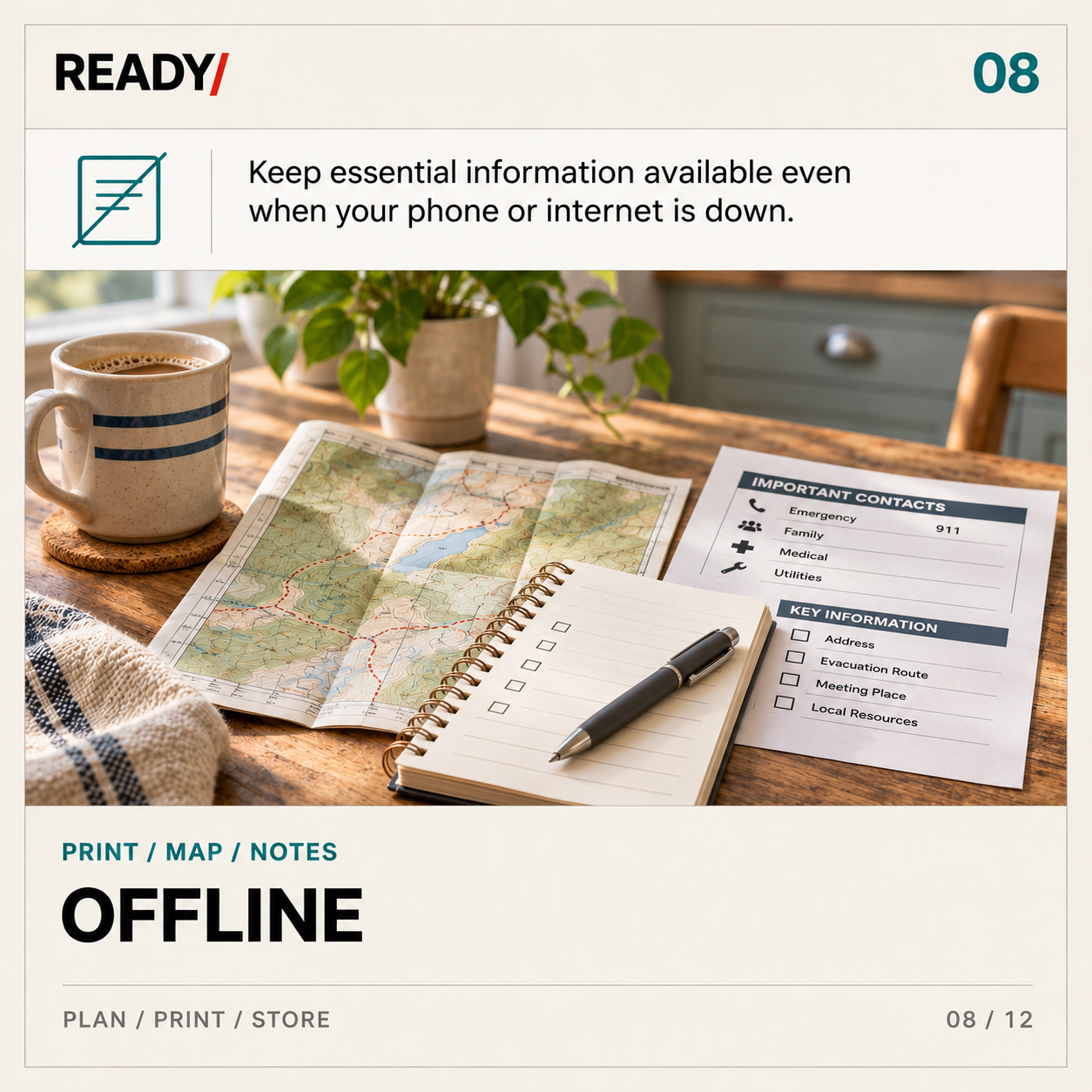
READY/ Offline campaign artwork.
READY/08

Offline

Useful information. Available offline.
  1. Choose the contacts and instructions you need without an internet connection.
  2. Keep an offline copy where the right people can find it.
  3. Review outdated details and keep sensitive information secure.
EXPLORE THIS TOPIC
READY/09 KNOW THIS HOME.
READY/09

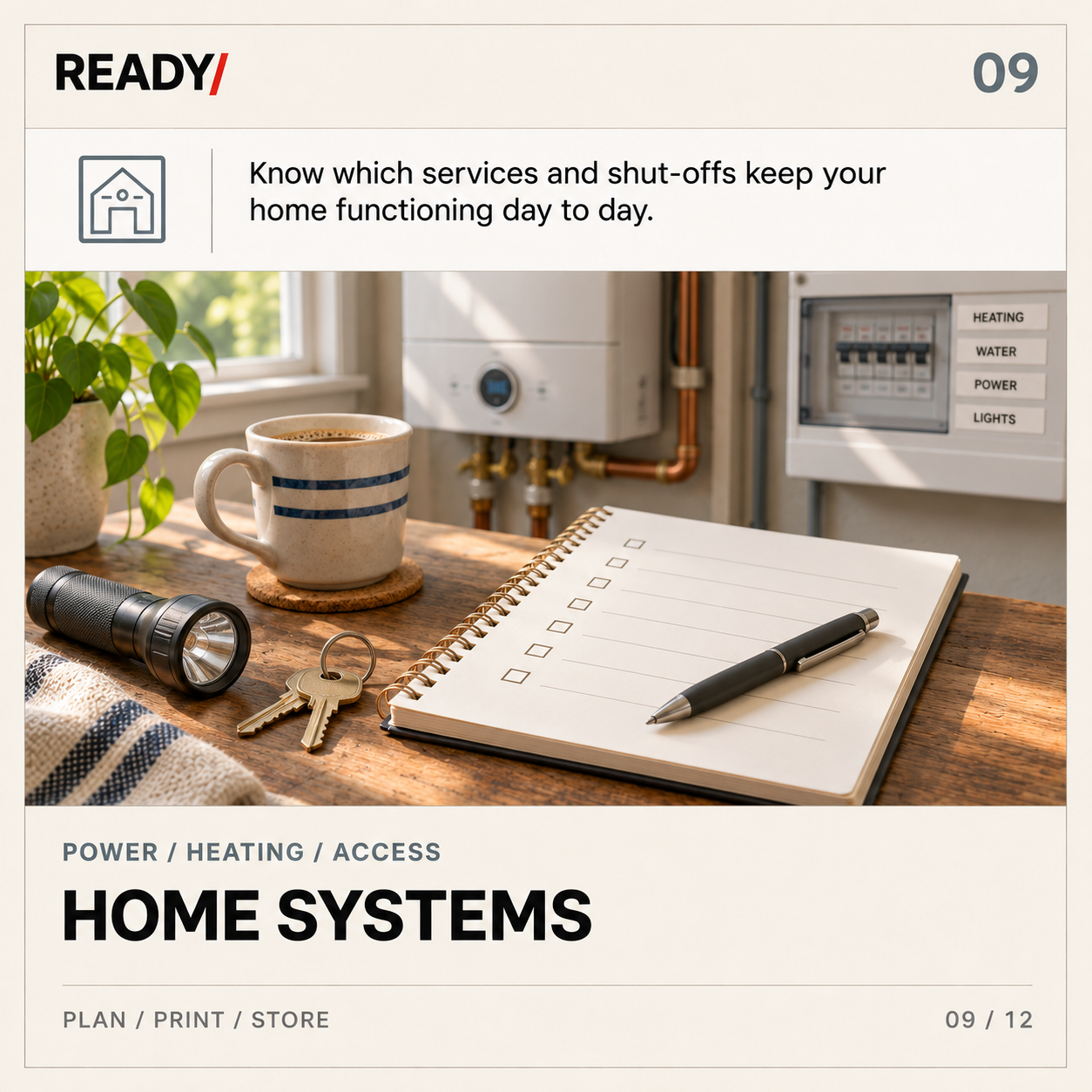
Home Systems

Record the systems. Keep the instructions.

  1. Record where relevant household systems and their instructions can be found.
  2. Keep supplier and qualified-tradesperson contact details together.
  3. Identify knowledge that currently depends on one person.
EXPLORE THIS TOPIC
READY/ Business / 72 Hours campaign artwork.
READY/10

Business / 72 Hours

People. Power. Internet. Suppliers.

  1. Identify essential tasks and their key dependencies.
  2. Assign an owner and a next step for each disruption scenario.
  3. Keep relevant contacts and instructions accessible to the people who need them.
EXPLORE THIS TOPIC
READY/11 ONE HOUSEHOLD. ONE SYSTEM.
READY/11

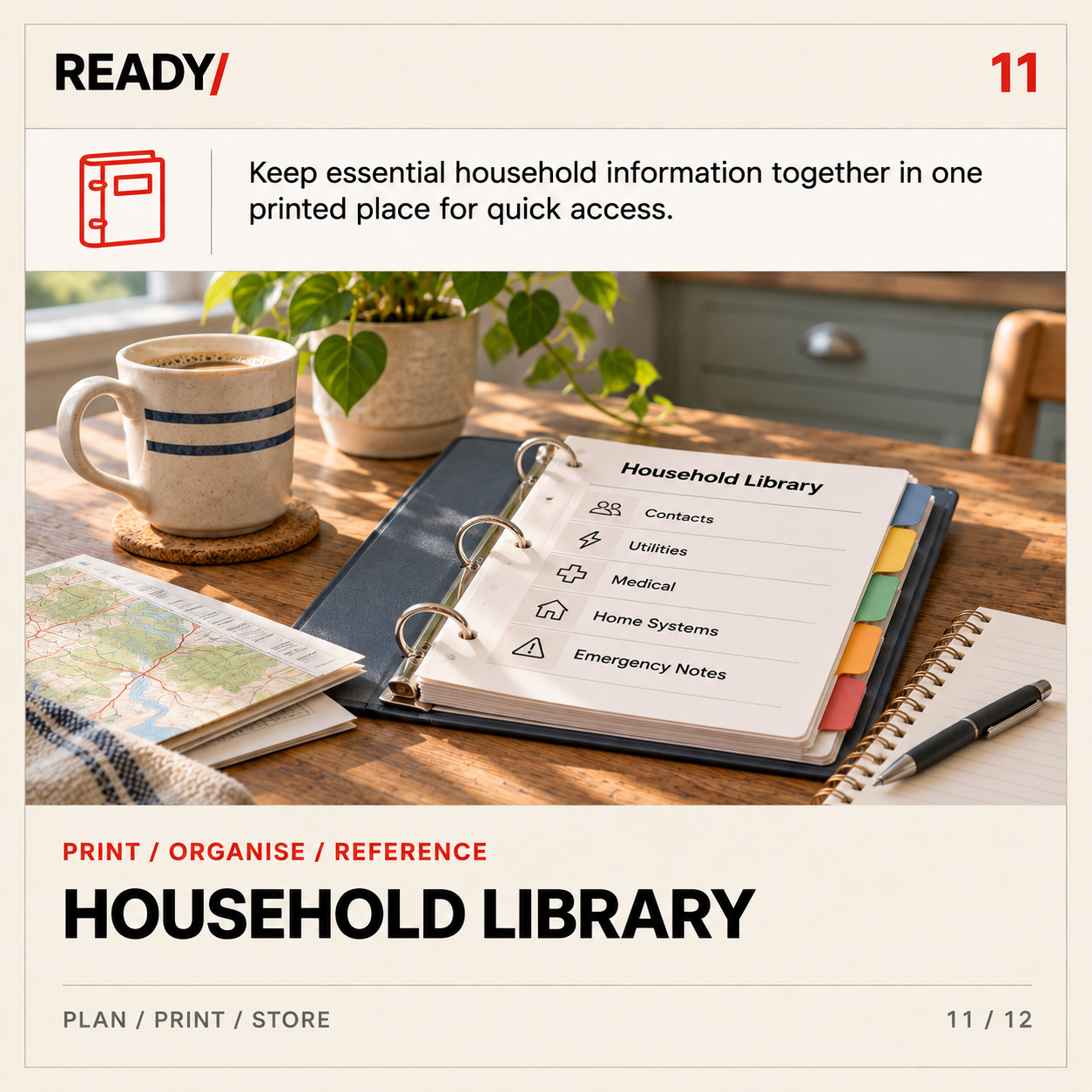
Household Library

Bring the household topics together.

  1. Identify which household topics apply to you.
  2. Use one consistent place for plans, contacts and review notes.
  3. Review the plan when people, needs or circumstances change.
EXPLORE THIS TOPIC
READY/12 HOME AND BUSINESS. CONNECTED.
READY/12

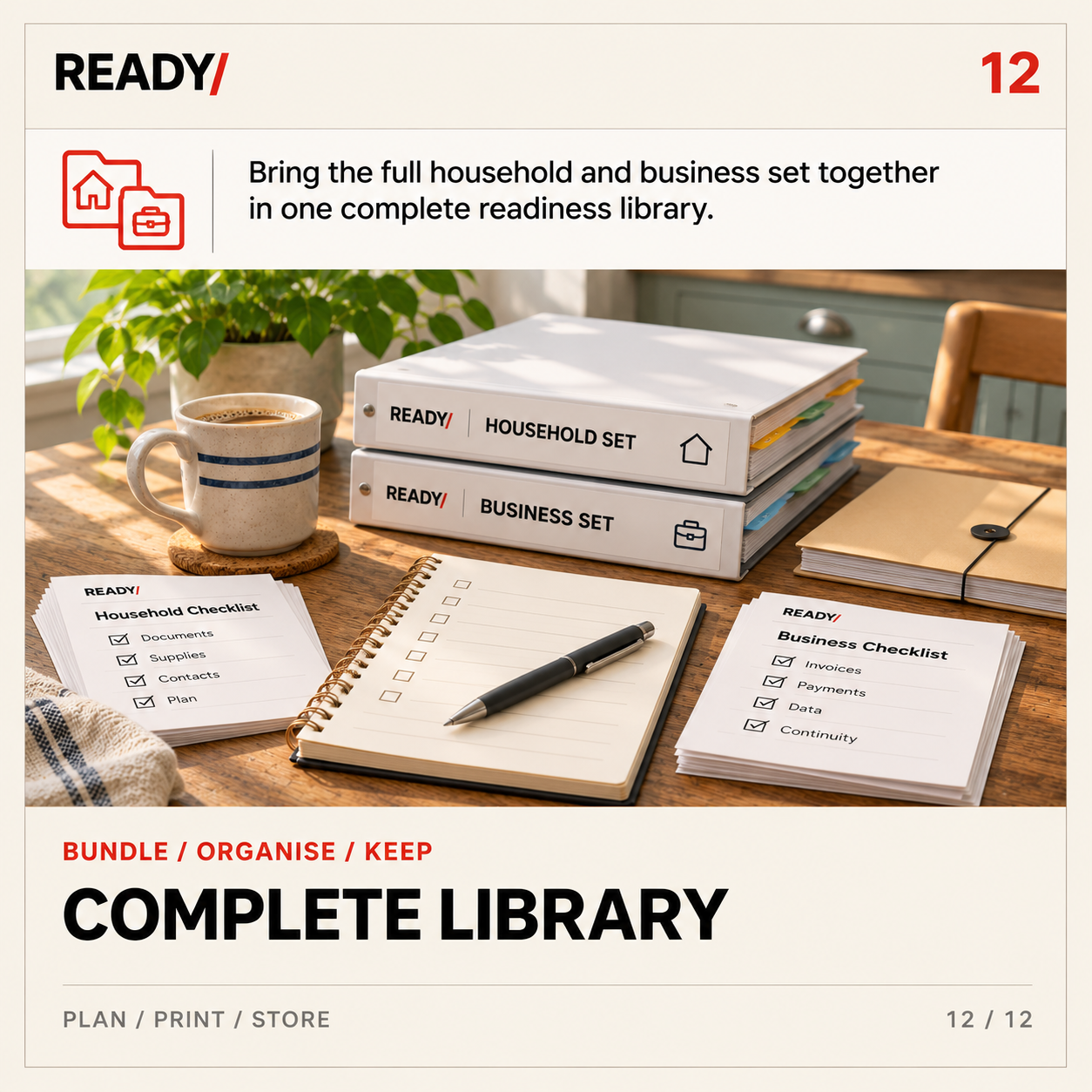
Complete Library

Two responsibilities. One planning system.

  1. Separate the essential needs of home from those of the business.
  2. Identify people, resources and dependencies shared between them.
  3. Agree responsibilities and keep both plans reviewed.
EXPLORE THIS TOPIC
Independent planning aids. Not official government guidance.FREE TOOLS →