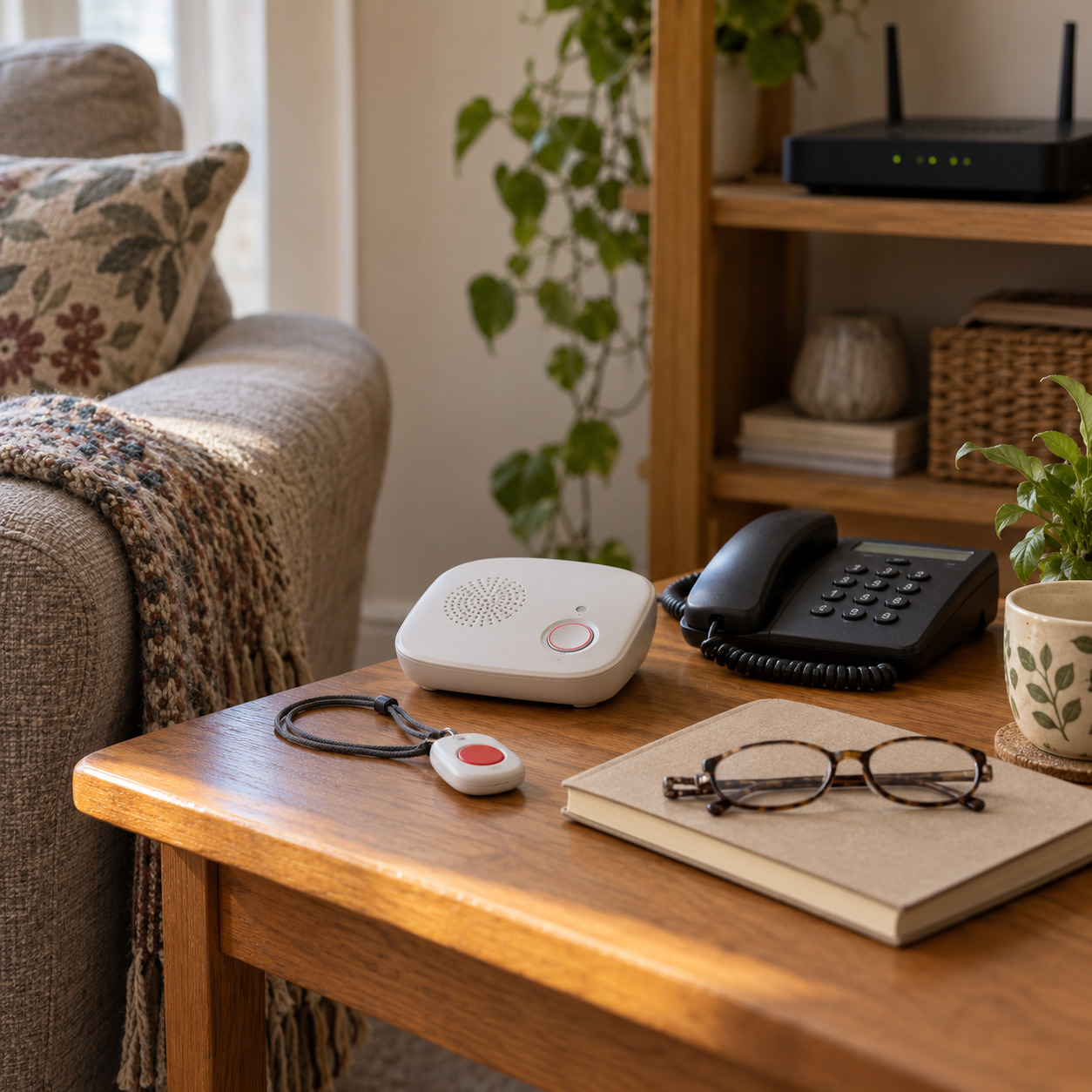
If a household uses a care alarm or health pendant, a telephone changeover needs more than a successful ordinary phone call. Ask who has confirmed the alarm arrangement, including what happens if the mains power fails.
This is a task to complete with the people providing the services. A household checklist cannot certify that a particular alarm, connection and receiving centre will work together.
Two confirmations to keep separate
Ofcom advises people to tell both their landline provider and their device supplier before moving to a digital landline if they have telecare or another device using the phone line. Digital landlines also depend on mains power unless there is a backup arrangement. [1]
The Telecare National Action Plan for England explains a further distinction: provision for access to emergency organisations through 999 does not itself ensure uninterrupted telecare calls. An alarm can depend on its own battery and on other equipment carrying its signal. [2]
That means “the telephone works” leaves another question open. The useful evidence is a provider’s answer about the alarm service, rather than a household assumption based on the handset.
Send one clear request
Use this as a starting point, adapting it privately to the person’s actual services:
Please confirm the alarm model and telephone service you have assessed. Will this alarm remain compatible after the change? How will an alarm call reach the receiving service during a power cut? What equipment and backup arrangements are involved, what limitations apply, and how should we arrange the recommended test? Please say who is responsible for each outstanding action.
Send the relevant questions to both providers. With the service user’s agreement, keep replies in one place so they do not have to repeat the story to every person helping them.
Make the handover understandable
The following is a suggested record, not a technical specification:
| Question | Record to keep |
|---|---|
| Who has answered? | Provider, date and reference |
| What was assessed? | The actual alarm and service combination |
| What remains to do? | Named organisation and next action |
| What test is agreed? | Provider’s procedure and appointment |
| What happens if it fails? | Provider’s contact and agreed arrangements |
Keep personal identifiers in the private record. A general family note can simply say where that record is and who can help retrieve it.
Do not turn the check into an outage
Do not unplug an alarm, router or other care equipment to run an improvised demonstration. Arrange testing with the telecare provider. Do not call 999 for a test.
A useful completion note might read: “Alarm supplier reply received; telephone provider action still awaiting confirmation.” That is more precise than a tick beside “digital phone done”. It also gives the next person helping a clear task to follow up.
Review the record when a provider, alarm or connection changes. The outcome you want is an arrangement the providers have explained and the user understands, with unresolved questions still visible.
Map the equipment your household depends on →