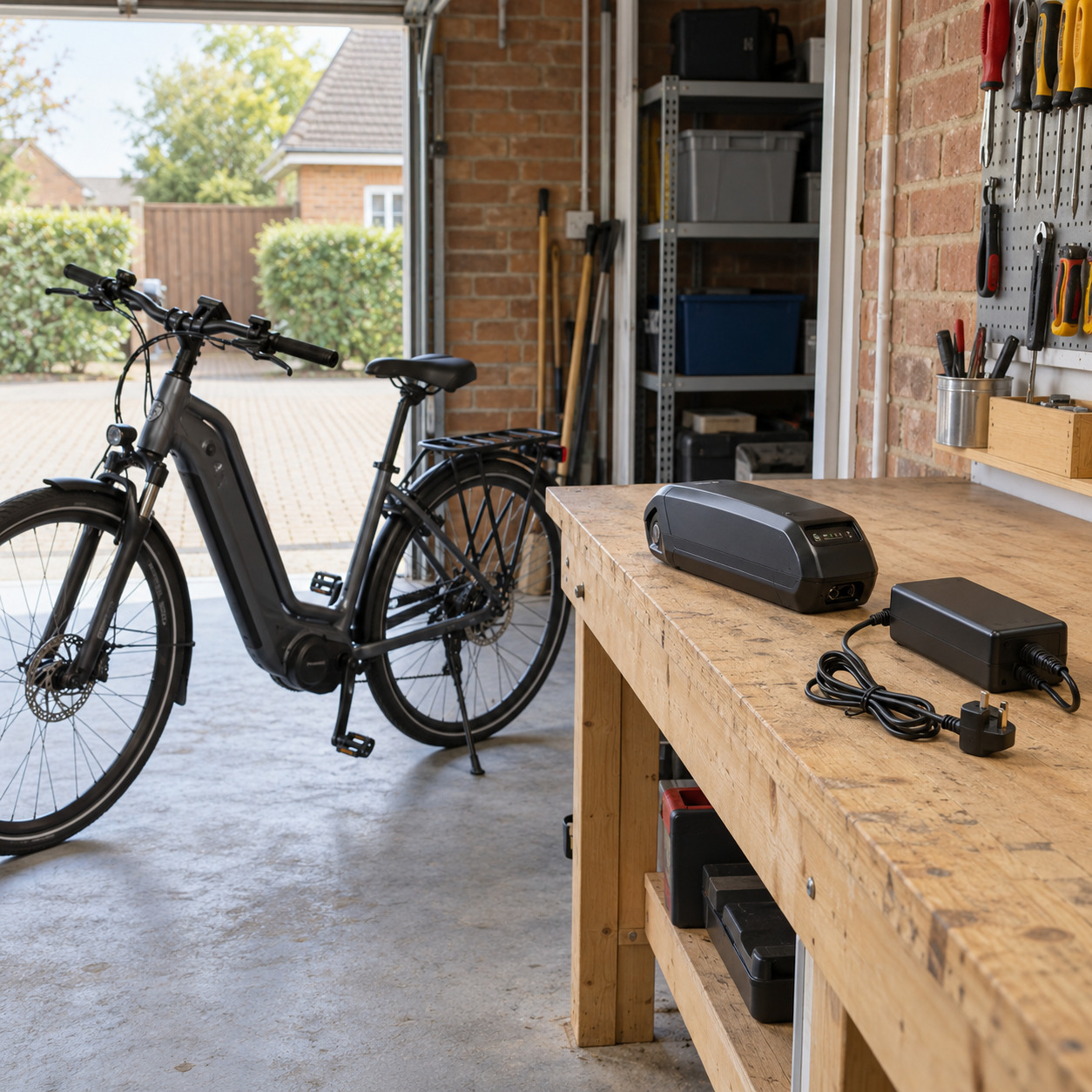
A convenient socket can create an inconvenient assumption: that charging can simply happen wherever the bike is left, for as long as it takes, while the household gets on with something else.
Plan the location and the timing together. If the routine depends on blocking an exit or leaving charging unattended, the routine needs changing.
Start with the published precautions
London Fire Brigade advises using the charger supplied with the battery or recommended by the manufacturer, following the instructions, keeping charging away from exits and main through-routes, and never charging unattended or while asleep. It also advises a hard, flat charging surface and allowing a hot battery to cool after use. [1]
Department for Transport guidance says not to charge where a fire could prevent escape, including communal escape routes. It advises charging only while awake and alert, not while away from home. Its guidance covers England, Scotland and Wales. [2]
These precautions describe conditions to meet. They are not a reason to improvise a new charger, adapt a battery or assume that any alternative room is suitable.
Walk through an ordinary evening
Use a paper exercise before changing equipment. Write down when the bike arrives home, where it is stored, when charging normally starts and what the household is doing during that period.
Then compare that routine with the actual manufacturer’s instructions and fire-safety advice. Which parts are confirmed? Where does the routine contradict the precautions? Who can resolve the remaining question?
For example, a note saying “charge after work” may hide a late return followed immediately by bedtime. The useful output is an identified scheduling problem, not a tick beside “charger available”.
Give the unresolved point an owner
Keep a short record:
- Equipment: the actual battery and charger, with the instructions location.
- Place: the proposed storage and charging location, with any question to resolve.
- Time: a routine when someone can be awake and present.
- Next action: who will obtain the relevant advice or change the routine.
This is a suggested way to organise the task. It is not an inspection certificate or a substitute for competent advice about your equipment or building.
If the only apparent option is a shared corridor or a space you do not control, raise the issue with the appropriate building manager rather than quietly using the space. Do not treat a photograph of another person’s arrangement as approval for yours.
Make the agreement usable by everyone
Tell other household members what the agreed routine is. Include people who might move the bike, plug it in to be helpful or assume that it can be left charging overnight.
Revisit the arrangement if the bike, battery, charger, home or daily timetable changes. A routine can become unsuitable even when the equipment is unchanged.
The useful result is a practical habit supported by the equipment instructions and current fire advice. Owning a charger is only one part of that habit.
Read the fire-safety guidance before changing the routine →