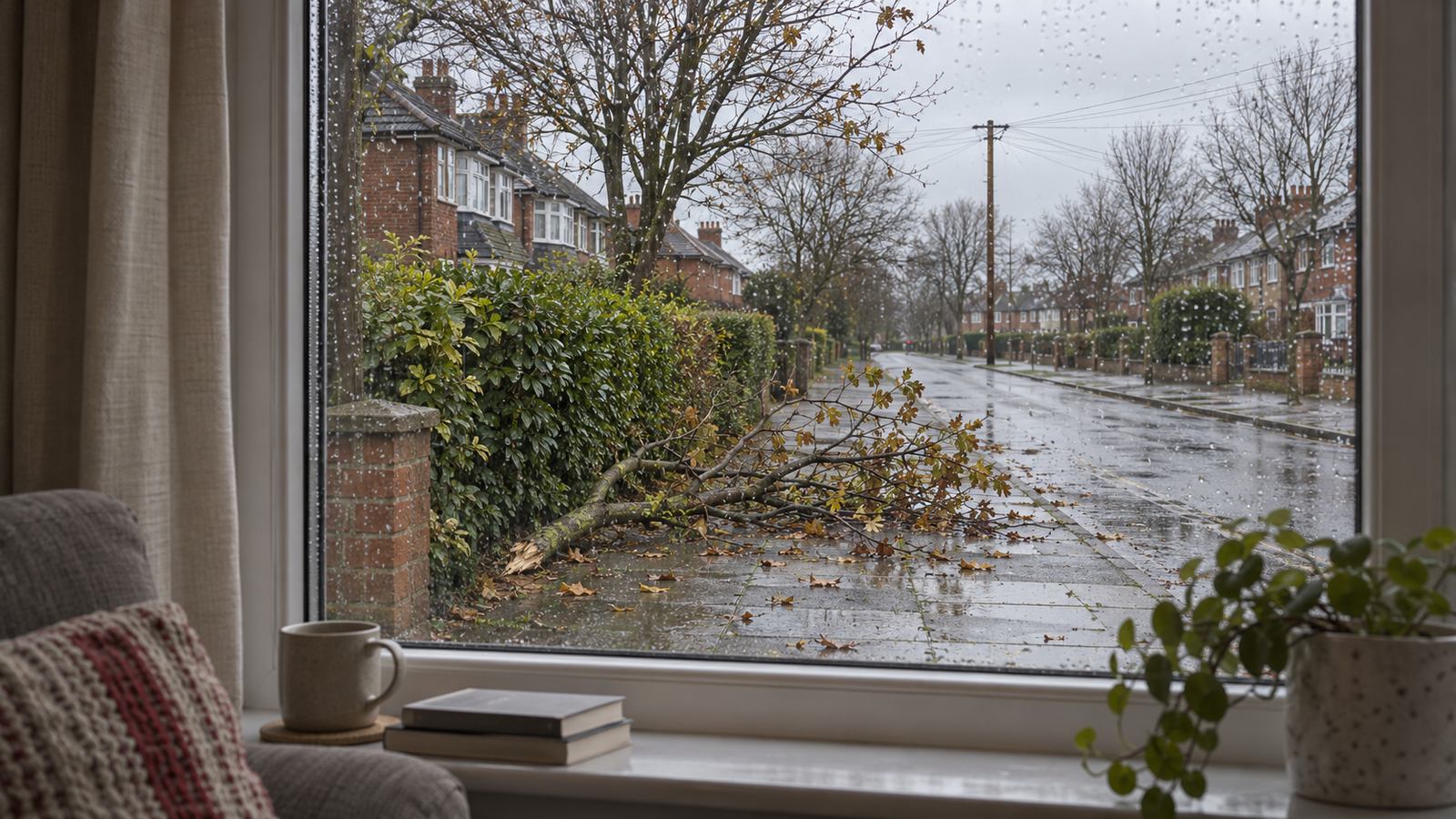
The scene: After strong wind, a branch has fallen on or near an overhead line. It might look like debris that could be moved out of the way. That assumption can be dangerous.
Why it matters
Electricity network operators tell the public to treat any damaged or fallen overhead electricity cable as live. A wire may be difficult to see amongst branches, particularly in poor light or after heavy rain. Do not assume a line is safe because no sparks are visible or because the surrounding area appears undamaged.
The Energy Networks Association's 2026 electrical-safety guidance says to evacuate the immediate area, keep others clear, report to the operator and not return until the operator confirms it is safe. A previously disconnected cable could be re-energised.
The safe decision
Stay clear. Do not touch a cable, pole, connected object or fallen branch. Do not attempt to move a vehicle, ladder or tool that may have touched electricity equipment.
Warn others from a safe location. Avoid bringing people close to show them the problem or to take a photograph.
Report to the right service. In Great Britain the free number 105 connects you to the local electricity network operator. In Northern Ireland, the Energy Networks Association identifies NIE Networks' reporting number as 03457 643 643. For injury or other immediate danger call 999 and explain that electricity may be involved. National Grid also advises calling police on 999 if a road or path is blocked by fallen lines.
Follow official instructions. Do not return until told it is safe by the operator or emergency responders.
A useful preparation without equipment
Make sure one adult in your household knows what 105 is for. For homes in Northern Ireland, write down the appropriate NIE Networks number instead. You don't need a storm kit or a close-up photograph to make this decision correctly.
Conversation question
Would you have known which number to call if a branch was touching an overhead wire? Avoid sharing an exact live hazard location in the comment thread; report it directly.
Sources
- Energy Networks Association, Electrical Safety Guidance for Home Owners/Occupiers, 2026.
- National Grid, Safety first.
In a real incident, stay clear and follow network-operator or emergency-service instructions. Never use this article as permission to inspect a suspected live wire.
Source links
- Energy Networks Association — Electrical Safety Guidance for Home Owners/Occupiers 2026.
- National Grid — Safety first: fallen overhead lines.
READY/ produces independent practical planning aids. This article does not replace current advice from public authorities, emergency services, providers or qualified professionals.