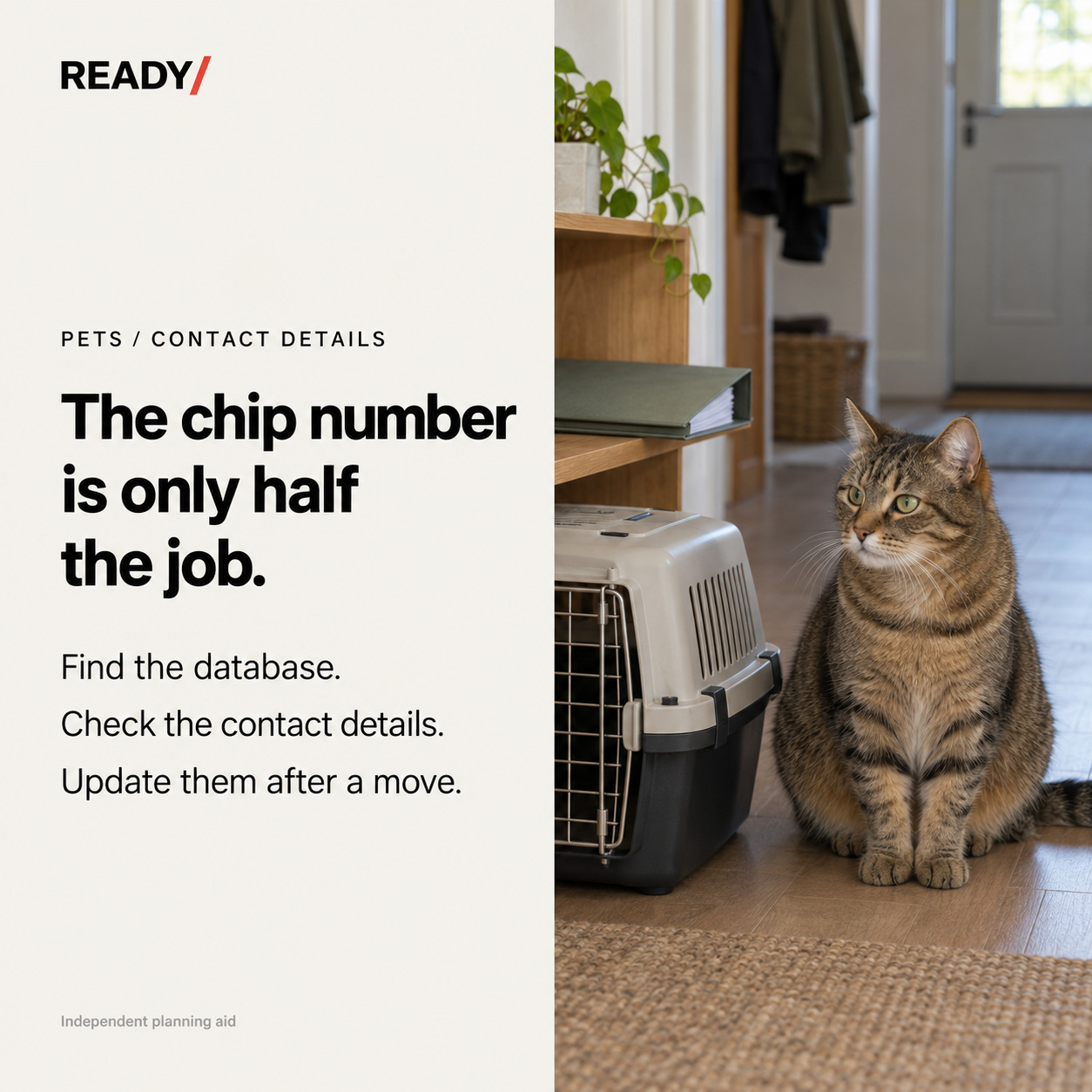
“Microchipped” is a reassuring word on a pet checklist. It is less useful if nobody knows which database holds the record or whether the phone number still works. The next action is an administrative check you can complete without buying another device.
Identification is different from tracking
PDSA explains that a microchip carries a unique number which a scanner can read. A cat’s chip is not linked to GPS and does not report its location. Current contact details help the scanning organisation and database connect a found animal with its owner. [2]
That distinction changes the household task. You are checking the route from identification to contact, rather than expecting a chip to show where an animal has gone.
Find the record, not just the paperwork
GOV.UK says owners should contact the database company to update their details. Its guidance also explains how to look up the database using the chip number. If you do not have that number, a vet, dog warden or rescue centre can scan the animal. [1]
A veterinary practice, an insurer and a database can appear in the same folder without being the same record. As a planning rule, check the database directly instead of using an update somewhere else as your evidence that the contact route is current.
You do not need to display the chip number on a shared noticeboard. Keep the identifying information and account access in private records.
Give the task a clear finish
Use three completion states:
| State | What it means for your check |
|---|---|
| Record not located | Find the chip number or arrange an appropriate scan |
| Record located, details unchecked | Contact the database through its genuine route |
| Contact details checked | Keep the confirmation privately and note the review date |
These are READY/ organising labels, not database-company status codes. They stop “we have a certificate somewhere” from being mistaken for a completed check.
Try a moving-house example
Imagine a household changes address and replaces the main contact phone. One person updates the vet’s record; another assumes that completes all pet administration. A later review finds that nobody checked the database.
The useful correction is to add a separate database task to the move list, with the person responsible and the company’s contact route. Keep a minimal reminder such as “database checked after move” in the household plan and the actual personal details in the private record.
This is an illustrative admin gap, not a claim that a particular database failed or that one check guarantees a reunion.
Ask about the missing-pet process in advance
While you have the genuine database contact route available, find its instructions for reporting a pet missing. Keep that route somewhere you can retrieve it without searching old promotional emails. If another person may help with the task, agree what they need to know and keep account access secure.
The practical outcome is modest and worthwhile: you can identify the record, the contact details have been checked directly, and you know which organisation to approach if the pet is missing. The word “microchipped” now has a usable process behind it.