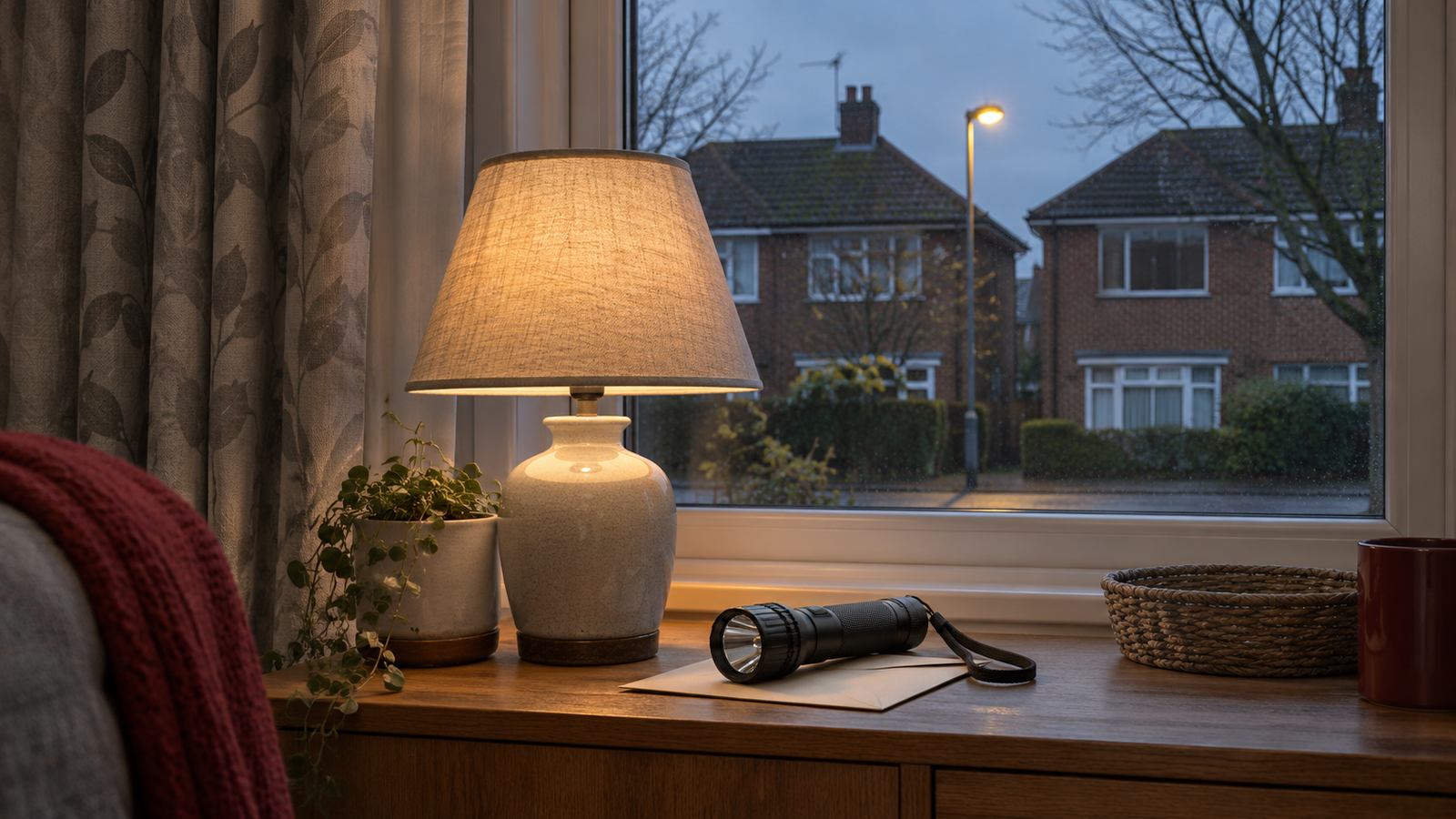
The apparent contradiction: The electricity system operator says Britain's winter supply outlook is secure, yet your home could still go dark during a storm. Both statements can be true because they concern different parts of the electricity system.
What the latest official forecast says
On 23 October 2026, the National Energy System Operator (NESO) published its Winter Outlook 2026/27. It forecast an operational surplus of 5.9 gigawatts, equivalent to a 9.5% margin above expected peak winter demand. NESO expects electricity supply to remain secure under the conditions it modelled. Its modelling considered thousands of potential winter conditions.
That margin is not a 9.5% chance of a power cut and it is not a guarantee that every individual property will have uninterrupted service. It is a high-level system-supply measure. The exact future outcome remains uncertain and depends on weather, generators, imports and operational conditions.
Why a household can still lose power
Even with adequate electricity generation available across Britain, distribution cables, poles, transformers, substations and local networks can be damaged or disrupted. Falling branches, floods and equipment faults may interrupt an individual area without indicating a national shortage.
The two questions are therefore different: Can the country meet forecast demand? and Can electricity reach my particular home today?
A more useful three-minute winter check
Find the right source. In Great Britain, call 105 to be connected to the electricity network operator responsible for your area. Save the operator's official outage-map page if you have internet access. Northern Ireland uses a separate electricity-network contact arrangement.
Identify one critical dependency. Start with a single issue relevant to your home: lights, heating controls, mobility equipment or refrigeration. For essential medical equipment, use the supplier and care team's individual continuity advice rather than a generic checklist.
Set an information rule. Prefer your network operator and official alerts over social-media claims that isolated faults prove a national grid emergency.
What not to infer
A margin forecast cannot tell you whether a particular street will lose power during the next storm, how long any local repair will take, or what emergency arrangements are right for your household. Don't present the outlook as an outage probability or a promise of zero disruption.
Conversation question
Which feels more realistic in your area this winter: a local storm outage or a nationwide shortage? What changed your view?
Source and review note
- NESO, Winter Outlook 2026/27, published 23 October 2026 and revised 27 October 2026.
- National Grid, official electricity-network contact information.
This is a dated interpretation of a published forecast, not a live supply assessment. Recheck the NESO outlook and operator notices before reusing after winter 2026/27.
Source links
- National Energy System Operator — Winter Outlook 2026/27: 5.9 GW / 9.5% system margin.
- National Grid — Power-cut contact 105 in Great Britain.
READY/ produces independent practical planning aids. This article does not replace current advice from public authorities, emergency services, providers or qualified professionals.